
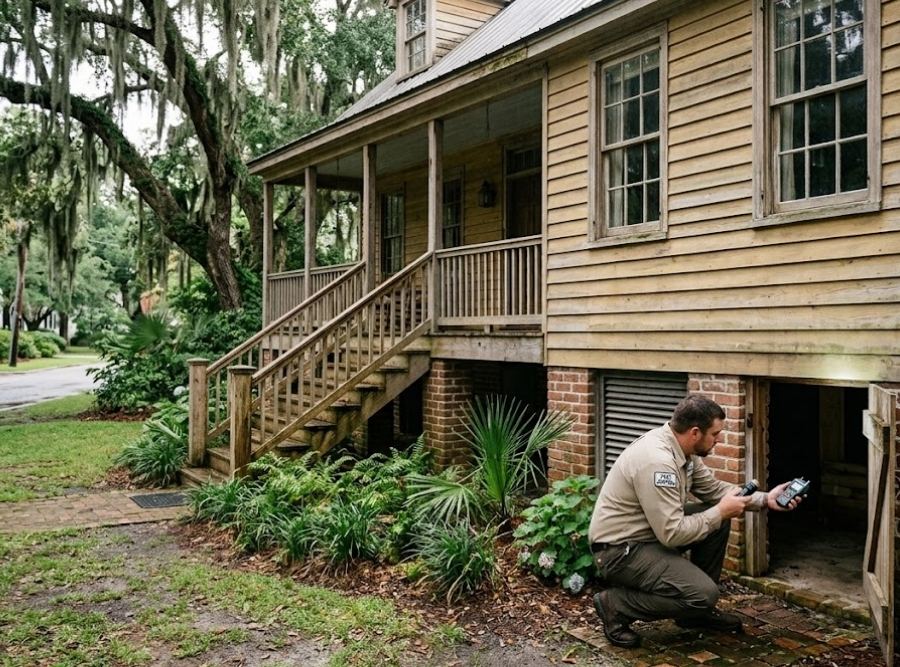
Older and historic homes in Beaufort can experience more pest activity because aging materials, crawl spaces, moisture, settlement gaps, mature landscaping, and decades of repairs create more places for insects and rodents to enter or hide. The home’s age alone is not the cause, but older construction often requires more consistent inspection, moisture control, exclusion, and preventive pest management than a newer, tightly sealed structure.
Historic homes are part of what makes Beaufort distinctive. Raised Lowcountry cottages, Victorian residences, Craftsman bungalows, and centuries-old wood-frame homes give neighborhoods around The Point, Downtown Beaufort, Pigeon Point, Mossy Oaks, and Spanish Point much of their character. That same age and craftsmanship, however, can lead homeowners to wonder whether older houses naturally attract more termites, palmetto bugs, ants, spiders, and rodents.
The honest answer is that pests are not drawn to a house simply because it is historic. They respond to moisture, shelter, food, accessible entry points, and favorable environmental conditions. Older homes are more likely to have accumulated those conditions over time, particularly in Beaufort’s warm, humid coastal climate. Original crawl spaces, aging wood trim, foundation openings, previous renovations, mature landscaping, and years of structural movement can create opportunities that newer homes may not have yet developed.
That does not mean historic homeowners must accept constant pest problems. Many older Beaufort homes remain structurally sound and can be protected successfully. The key is preserving the architecture while understanding how the building has changed, where moisture is collecting, and how pests are using openings that may have developed gradually over decades.
Older Homes Usually Have More Entry Points, Not More Attractive Wood
One of the most common misconceptions is that old wood naturally attracts pests more than new wood. Termites, ants, beetles, cockroaches, and rodents are not choosing a house because they appreciate its age or historic materials. They are taking advantage of access, moisture, concealed shelter, and areas where maintenance has fallen behind.
Historic construction contains many transitions that can shift over time. Wood siding expands and contracts, window frames settle, door thresholds wear down, masonry joints crack, and utility penetrations are enlarged or modified as plumbing, electrical, cable, and HVAC systems are updated. A gap that was not present when the house was built may gradually develop around a sill plate, crawl-space door, roof transition, porch connection, or repaired section of siding.
Original windows and doors often contribute to the problem. They may be beautifully crafted and worth preserving, but they rarely seal as tightly as modern units without regular weatherstripping and adjustment. Palmetto bugs can slip beneath worn thresholds, ants can follow narrow gaps around trim, and flying insects gather near windows where interior light draws them after dark.
Older foundations also tend to create more access opportunities. Raised cottages and pier-and-beam homes often include crawl-space vents, masonry openings, wood lattice, porch voids, and numerous utility routes beneath the structure. Each opening may serve a legitimate purpose, but together they create a larger exterior surface that requires inspection and maintenance.
The practical lesson is that a historic home does not need to be sealed like a modern airtight structure. It needs thoughtful exclusion that respects drainage, ventilation, historic materials, and the way the house was designed to function. Filling every opening indiscriminately can trap moisture or block necessary airflow, while ignoring them entirely allows pests to use the same pathways year after year.
Beaufort’s Humidity Makes Small Maintenance Issues More Important
Age alone rarely explains a pest problem as clearly as moisture does. Beaufort’s high humidity, heavy rainfall, mild winters, mature tree canopy, and proximity to tidal water allow insects and wood-destroying organisms to remain active through much of the year. An older home with a damp crawl space or shaded foundation can provide favorable conditions even when the interior is spotless.
Raised homes were designed in part to improve airflow and protect living areas from ground moisture, but crawl spaces still require attention. Damaged vapor barriers, standing water, plumbing leaks, poor grading, clogged drainage, and inadequate ventilation can keep structural wood damp for long periods. Termites, wood-decay fungi, cockroaches, silverfish, and other moisture-associated pests benefit from those conditions.
Mature landscaping can make the problem worse without appearing neglected. Large live oaks, dense shrubs, Spanish moss, shaded garden beds, and established ground cover reduce sunlight and slow evaporation beneath and around the home. Mulch, leaf litter, and organic debris may stay damp for days after a storm, giving palmetto bugs, ants, beetles, and spiders protected harborages only a few feet from the foundation.
This is why pest activity often increases after periods of heavy rain. Saturated soil and flooded outdoor hiding places force ground-dwelling pests toward drier shelter, while elevated humidity helps them survive longer around the structure. Homeowners may find palmetto bugs indoors, ants following new routes, or millipedes gathering near thresholds even though nothing inside the house has changed.
Moisture can also weaken wood over time. Termites do not require rotten wood to infest a home, but damp conditions often make a structure more vulnerable by supporting fungal decay and creating a dependable environment near the foundation. Once moisture becomes persistent, pests and deterioration can reinforce one another until the first visible symptom appears inside as soft flooring, loose trim, sticking doors, or a musty odor.
Crawl Spaces Often Explain Why Pest Problems Keep Returning
When an older Beaufort home has recurring pest activity, the crawl space is one of the first areas that deserves attention. Homeowners naturally focus on the kitchen, bathroom, or room where an insect was found, but the conditions beneath the floor often provide a more complete explanation.
Historic crawl spaces can contain decades of repairs, abandoned plumbing, old insulation, construction debris, utility penetrations, support piers, and areas that are difficult to access. A small opening around a pipe may allow ants or cockroaches to follow moisture toward the living space. A damaged vent or crawl-space door can admit rodents, while damp framing and wood-to-soil contact can increase termite risk.
Rodents may find older crawl spaces especially useful because they provide protected travel routes beneath the home. Once inside, they can move through wall cavities, plumbing chases, attic spaces, and gaps around ductwork. Scratching at night, droppings near access points, damaged insulation, or persistent odors may indicate that the issue extends beyond an occasional animal passing outdoors.
Cockroaches and spiders also use crawl spaces as staging areas. American and smokybrown cockroaches thrive in damp, protected environments and may enter living spaces through plumbing openings or gaps around flooring transitions. Spiders follow because the crawl space supports the smaller insects they feed on, which is why removing webs inside without addressing the insect population below rarely produces lasting results.
A crawl-space inspection should evaluate more than pest evidence. Moisture readings, drainage, vapor-barrier condition, ventilation, plumbing leaks, foundation openings, wood contact, insulation, and previous repairs all help explain why pests are present. Treating the insect without correcting those conditions often leads to the same problem returning after the next humid period or storm.
Historic Wood Does Not Automatically Mean Termite Damage
Many Beaufort homeowners assume termites are simply inevitable in an old wooden house. That belief can create two opposite mistakes: unnecessary panic over any damaged board or dangerous complacency because “old homes always have termites.” Neither approach is helpful.
Subterranean termites can attack both new and old homes. They travel through soil and concealed pathways to reach structural wood, often remaining hidden inside sill plates, floor joists, porch supports, or wall framing. The age of the wood matters less than whether termites can reach it and whether moisture and construction conditions support their activity.
Older homes may have increased exposure because of wood-to-soil contact, low crawl spaces, porch supports, lattice, additions, or previous repairs that changed the original termite barrier. Historic renovations can also conceal old damage behind newer finishes, making it difficult for homeowners to tell whether the evidence is active, repaired, or unrelated to termites.
Mud tubes on foundation walls, discarded wings near windows, hollow-sounding trim, soft wood, or swarmers emerging indoors should be inspected rather than covered or sprayed. Flying ants are commonly mistaken for termites, and old wood decay is often mistaken for active feeding. Accurate identification prevents unnecessary treatment while ensuring true termite activity is addressed before more framing is affected.
The strongest protection comes from routine inspection and moisture management rather than assuming the home is either safe or doomed because of its age. Historic wood can remain sound for generations when it is kept dry, maintained, and protected from concealed termite access.
Renovations Can Create Hidden Pest Pathways
Renovations are part of owning an older Beaufort home, but they can complicate pest prevention when different construction eras meet. A historic wall may connect to a modern addition, a porch may have been enclosed, or new plumbing and electrical systems may pass through original framing. Each change creates transitions that require careful sealing and inspection.
Previous repairs are not always visible or well documented. An old crawl-space opening may have been covered without closing the gap behind it, damaged wood may have been concealed rather than replaced, or a utility route may connect directly from the exterior to a wall void. Pests use these concealed pathways long before homeowners notice signs inside.
Work performed during renovation can also disturb existing colonies. Opening walls, removing flooring, replacing siding, or repairing a porch may displace ants, cockroaches, rodents, or termites that had remained hidden. A sudden increase in activity after construction does not necessarily mean the renovation created the pests, but it may have changed where they travel.
Historic preservation adds another layer of complexity because original materials should not be removed or altered unnecessarily. Effective pest management must work with the home’s architecture rather than treating it like new construction. That may mean using targeted exclusion, repairing specific gaps, improving drainage, or treating concealed areas without compromising original trim, siding, masonry, or decorative features.
Inspector’s Insight: Pest Activity Often Reveals a Building Problem First
One of the most valuable lessons from inspecting older Beaufort homes is that pests frequently point toward conditions homeowners have not yet noticed. Ants repeatedly appearing near one baseboard may be following a moisture route from beneath the floor. Palmetto bugs in a bathroom may be entering through a plumbing penetration connected to a damp crawl space. Rodents in an attic may reveal a roofline gap that also allows rain or humid air into the structure.
This does not mean every insect indicates structural failure. It means recurring activity should be interpreted as information rather than treated as a series of unrelated sightings. Where the pest appears, when it becomes active, and how weather affects the pattern can reveal much more than a single spray application ever will.
Historic homes change gradually. A crawl-space door that sealed properly five years ago may now sit unevenly, a downspout may be discharging closer to the foundation, or a mature shrub may have grown against siding and blocked airflow. Pest activity often becomes noticeable before the maintenance issue appears serious enough to attract attention on its own.
That is why the best inspection looks at the home as a complete system. Pests, moisture, architecture, landscaping, repairs, and seasonal weather all interact. Solving the problem correctly means understanding that relationship instead of assuming the house attracts bugs simply because it is old.
What Homeowners Can Do Without Damaging a Historic Home
Older Beaufort homes often respond well to careful maintenance, but the work should respect the way the structure was built. Replacing worn weatherstripping, repairing screens, clearing gutters, redirecting downspouts, and trimming vegetation away from siding can reduce pest pressure without altering historic materials. Keeping firewood, cardboard, and stored items away from the foundation also removes protected harborages that insects and rodents may use.
Moisture deserves equal attention. Crawl spaces should be checked for plumbing leaks, damaged vapor barriers, standing water, and areas where drainage directs rain beneath the home. Mulch and leaf litter should not remain piled against wood siding, porch supports, or lattice, and irrigation should not keep the foundation constantly damp.
Some openings should not be sealed without understanding their purpose. Foundation vents, masonry drainage points, roof ventilation, and other original building features may be necessary for airflow or moisture management. Blocking them indiscriminately can trap humidity, worsen wood decay, or create conditions that attract even more pests.
The most useful homeowner habit is tracking patterns. Note whether ants return to the same wall, palmetto bugs appear after storms, or scratching begins only during certain seasons. Those details help separate a temporary exterior invader from a larger problem involving moisture, structural access, or an established harborage.
Why Repeated Indoor Spraying Usually Falls Short
Store-bought sprays can kill the insect directly in front of you, but they rarely explain why another one appears a few days later. In an older home, the visible pest may be traveling from a crawl space, attic, porch void, wall cavity, or exterior landscape bed. Treating only the living space leaves that source and entry route unchanged.
Repellent sprays can also complicate certain infestations. Ants may shift their trails into new wall voids, while cockroaches may retreat deeper into concealed spaces. Foggers are especially limited when pests are beneath floors, inside walls, or living outdoors around the foundation.
Termite evidence should never be sprayed, scraped away, or covered before it can be inspected. Mud tubes, swarmers, discarded wings, or damaged wood provide valuable clues about whether activity is current, historical, or being confused with another insect. Destroying that evidence can make accurate diagnosis more difficult.
More pesticide is not the same as better pest control. The strongest results usually come from combining identification, exclusion, moisture correction, habitat reduction, and targeted treatment. That approach is especially important in historic homes, where unnecessary chemical use can mask the real condition without addressing the building issue supporting it.
When an Older Home Needs Professional Attention
An occasional outdoor insect does not always require extensive treatment. A single palmetto bug after heavy rain or a spider near an exterior light may be part of normal Lowcountry pest pressure. Recurring patterns, however, deserve a closer look.
Daily ant trails, repeated cockroach sightings, scratching in walls, droppings near attic or crawl-space access, and musty odors that continue after cleaning can indicate an established problem. Soft flooring, loose trim, bubbling paint, visible mud tubes, or piles of discarded wings should be evaluated promptly because they may involve moisture, termites, or deteriorating wood.
The timing of the activity also matters. Problems that increase after storms often point toward saturated soil, flooded harborages, or moisture moving beneath the home. Activity limited to one wall or one side of the house may suggest a localized entry point, drainage issue, or landscape condition rather than a problem throughout the structure.
Professional attention becomes especially important when structural wood, wiring, insulation, or HVAC components may be affected. Rodents can contaminate insulation and damage electrical lines, while termites and fungal decay can weaken floor systems before the homeowner notices obvious movement. Early inspection is usually less disruptive than waiting until repairs become unavoidable.
What a Historic-Home Pest Inspection Should Include
A good inspection of an older Beaufort home should begin with the structure, not with automatic treatment. The inspector should evaluate how the house is built, where moisture collects, which materials are original, and how later additions or repairs may have changed pest access. Historic homes cannot be treated effectively with a one-size-fits-all checklist.
The crawl space, foundation vents, porch connections, sill plates, floor joists, attic openings, roof transitions, utility penetrations, door thresholds, and window frames all deserve attention. Exterior landscaping, downspouts, shaded soil, tree debris, and wood-to-soil contact should also be evaluated because those conditions often create the pressure that drives pests indoors.
The inspection should distinguish old evidence from active problems. Previous termite damage, abandoned rodent nests, or repaired wood may still be visible long after the original issue was resolved. Accurate interpretation prevents unnecessary treatment while ensuring current activity is not overlooked.
A clear explanation is just as important as the inspection itself. Homeowners should understand what was found, why it matters, what can be corrected through maintenance, and what requires treatment or repair. Historic preservation decisions are easier when the pest-control plan is based on evidence rather than fear.
Long-Term Prevention Works Better Than Emergency Treatment
Older homes benefit from consistency because the conditions around them change slowly over time. Weatherstripping wears, vegetation grows, crawl-space moisture shifts, and repairs introduce new transitions. A home that was well protected several years ago may develop new vulnerabilities without any dramatic failure.
Regular inspections can identify these changes before pests become established. A small opening around a utility line is easier to seal before rodents use it, and a damp crawl-space area is easier to correct before fungal decay or termite activity spreads. Preventive care also protects original materials that may be difficult or expensive to replace.
Long-term management does not mean constant interior spraying. In many historic homes, the most valuable work involves exterior exclusion, moisture monitoring, landscape adjustments, targeted treatment, and periodic inspection of high-risk areas. The objective is to reduce pest access while preserving the structure’s design and materials.
This approach also creates a better record for homeowners, property managers, and future buyers. Documented inspections, termite protection, moisture corrections, and repairs provide useful history during renovations or real estate transactions. A well-maintained historic home can remain both architecturally authentic and effectively protected.
Historic Beaufort Homes Can Be Protected Without Losing Their Character
Older and historic homes in Beaufort may experience more pest pressure than newer houses, but not because age automatically attracts insects or rodents. The real causes are usually moisture, structural movement, aging seals, crawl-space conditions, mature landscaping, and the many small openings that develop as a house changes over decades.
Those challenges are manageable when the home is treated as a complete system. Pest activity, drainage, humidity, landscaping, foundation design, repairs, and original materials all influence one another. Addressing only the insect rarely produces lasting results if the moisture or entry condition remains.
The goal should not be to strip away historic features or seal the house so aggressively that it can no longer manage moisture properly. It should be to identify vulnerable areas, preserve necessary ventilation and drainage, correct conducive conditions, and use targeted pest management where evidence supports it.
Mr. Pest Control can inspect older and historic Beaufort homes with attention to both pest behavior and building character. A thoughtful evaluation can help determine whether the activity is seasonal, moisture-related, structural, or part of an established infestation, allowing homeowners to protect the property without compromising what makes it worth preserving.

Joe Duncan is the owner of Mr. Pest Control, a family-owned pest control company that has served Bluffton, SC and the surrounding Lowcountry since 1955. As the third generation to run the business, Joe and his crew provide residential and commercial pest control, termite control, mosquito treatment, and bed bug services throughout Beaufort and Jasper County, SC. He’s built the company’s reputation on straightforward, no-nonsense service backed by a money-back guarantee.