
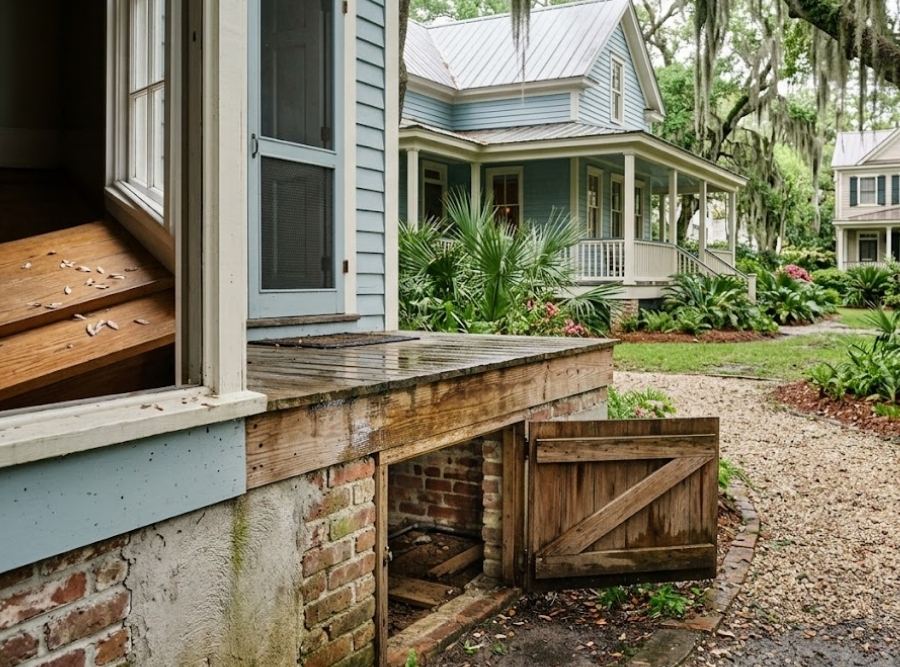
Termites in Beaufort, South Carolina, most commonly swarm during warm, humid weather from late winter through spring, especially after rainfall. Swarming can also occur later in the year depending on the termite species and weather conditions, so winged insects or piles of discarded wings inside a home should be professionally identified rather than ignored.
A warm afternoon follows several days of rain, and suddenly hundreds of winged insects appear around a window, porch light, or interior doorway. Within an hour, many of them are gone, leaving behind small piles of wings across floors and windowsills. For Beaufort homeowners, this can be one of the most alarming signs of termite activity because the insects seem to emerge all at once and disappear just as quickly.
Termite swarming is not random, and it does not mean a colony formed overnight. A swarm is the reproductive stage of a mature termite colony that may have been active in the soil or structure for years without producing obvious indoor signs. The winged termites, known as alates, leave the colony to pair, disperse, and attempt to establish new colonies elsewhere.
Beaufort’s warm coastal climate creates a long window for this activity. High humidity, wet soil, mild winters, heavy spring rain, marsh-influenced moisture, and shaded crawl spaces allow subterranean termites to remain active for much of the year. Understanding when swarms happen is useful, but understanding where the swarmers appeared and what they mean is far more important.
The Main Termite Swarming Season in Beaufort Is Spring
Most subterranean termite swarms in Beaufort occur from late winter through spring, with activity often becoming more noticeable as daytime temperatures rise and the soil remains moist. Warm, humid days following rain create particularly favorable conditions because mature colonies respond to changes in temperature, moisture, and atmospheric conditions when releasing reproductive termites.
This is why termite calls often increase after the first stretch of consistently warm spring weather. A house may show no obvious activity throughout winter, then suddenly have winged insects gathering near windows or lights after a humid rain event. The swarm itself may last less than an hour, but the colony that produced it has usually been present much longer.
Spring is not the only possible swarming period. Different termite species may release alates at different times of day and during different parts of the warm season. Weather patterns also vary from year to year, and Beaufort’s mild winters can allow activity to begin earlier than homeowners expect. A warm period after rain can trigger swarming even when the calendar does not feel like peak termite season.
The safest rule is not to dismiss winged insects simply because they appear outside the expected spring window. If insects emerge indoors, collect around windows, or leave piles of wings inside the home, identification matters regardless of the month.
Why Warm Rainy Weather Triggers Termite Swarms
Termites depend heavily on moisture. Subterranean colonies live in the soil or maintain contact with it, using protected mud tubes to travel between the ground and structural wood. When soil moisture is favorable and temperatures rise, mature colonies are more likely to release winged reproductives.
Rain does not suddenly create termites. Instead, it improves the conditions needed for swarmers to leave the colony and survive long enough to disperse. Humid air slows dehydration, moist soil supports the parent colony, and calmer weather often gives the winged termites a better opportunity to fly and pair.
Beaufort provides these conditions frequently. Spring rain, afternoon thunderstorms, damp crawl spaces, shaded foundations, marsh-adjacent properties, and high year-round humidity all help maintain the moisture termites need. Homes around Downtown Beaufort, The Point, Pigeon Point, Mossy Oaks, Spanish Point, Lady’s Island, and other established neighborhoods may experience especially persistent pressure where mature landscaping and older crawl-space construction keep soil shaded and damp.
Newer homes are not exempt. Poor drainage, irrigation near the foundation, disturbed treatment zones, wood debris, or structural penetrations can create favorable conditions even in recently built properties. The age of the home changes where inspectors look, but it does not eliminate the possibility of termite activity.
What a Termite Swarm Actually Means
A termite swarm means a colony has reached reproductive maturity and is releasing alates to establish new colonies. It does not mean the winged insects are the termites responsible for most structural damage. Worker termites remain hidden in the soil, mud tubes, or wood, where they continue feeding and supporting the colony.
This is one of the biggest misconceptions homeowners have. They vacuum the swarmers, spray the visible insects, and feel relieved when the activity stops. The swarm ends because reproductive flights are naturally brief, not because the underlying colony has been eliminated.
Where the swarm occurs provides an important clue. Termites flying around an outdoor light may have come from a colony somewhere in the surrounding landscape. Swarmers emerging indoors, appearing from a wall, collecting in several rooms, or leaving wings on interior windowsills create greater concern that an active colony may be connected to the structure.
Even then, the swarm location is not always the exact point where workers are feeding. Winged termites move toward light, so they may emerge from a concealed area and gather at the nearest bright window or door. A thorough inspection must follow the evidence back to crawl spaces, foundations, sill plates, floor systems, porches, utility penetrations, and other possible access points.
Flying Ants and Termite Swarmers Are Easy to Confuse
Many homeowners initially describe termite swarmers as flying ants. The two insects can appear at the same time of year, especially after warm rain, and both may gather around lights or windows. Correct identification matters because flying ants and termite alates point to very different pest problems.
Termite swarmers generally have straight antennae, a broad waist, and two pairs of wings that are approximately equal in length. Flying ants usually have bent antennae, a visibly narrow waist, and front wings that are longer than the rear pair. These details can be difficult to see when insects are moving or when only loose wings remain.
Homeowners do not need to make a perfect identification themselves. Collecting a few intact insects in a container, taking clear photographs, and leaving some evidence undisturbed can make professional identification much easier. Sweeping everything away or spraying the insects before documenting where they emerged can remove useful clues.
Discarded wings are particularly important. After a short flight, termite alates shed their wings and attempt to pair. Piles of nearly identical wings near a window, baseboard, doorway, or light fixture may be the only evidence left once the insects disappear.
Does Seeing Swarmers Mean the House Has Termites?
Seeing termite swarmers outdoors does not automatically prove the home is infested. Termites are common throughout the Lowcountry, and outdoor colonies may release alates that gather around porch lights, garage lights, storefronts, and illuminated windows. Regional termite pressure is expected in Beaufort’s climate.
Indoor swarmers deserve more concern. When winged termites emerge from within a home, appear in multiple interior areas, or leave piles of wings where windows and doors remained closed, there may be an active colony in or beneath the structure. That does not reveal how extensive the damage is, but it does justify a prompt inspection.
Another common mistake is assuming a swarm means termites just arrived. In reality, a mature colony usually takes time to develop before producing reproductive termites. The swarm may be the first visible sign of activity that has existed quietly for months or years.
This is why waiting to see whether the insects return can be risky. Swarming may occur only briefly, and the absence of another swarm does not mean worker termites have stopped feeding. The visible event ends quickly while concealed activity can continue.
Inspector’s Insight: The Wings Often Tell More Than the Insects
By the time an inspector arrives, the swarm itself is often over. Homeowners may have vacuumed the insects, wiped down the windowsills, and sprayed the room where they appeared. What remains are usually a few loose wings, photographs, and a description of what happened.
Those details can still be extremely valuable. The location of the wings, whether windows were open, the time of day, recent weather, and whether insects appeared from a wall or floor transition help narrow the possible source. A pile of wings beside a closed interior window tells a different story from insects gathering outside beneath a porch light.
The best thing a homeowner can do is document the event before cleaning. Photograph the insects and wings, collect a sample, note the rooms involved, and avoid destroying mud tubes or opening damaged wood. Good evidence helps the inspection begin with facts instead of guesswork.
Most importantly, do not assume the problem ended when the swarm disappeared. Swarmers are the visible reproductive members of a much larger colony, and the hidden workers are the insects responsible for structural feeding.
What Homeowners Should Do During a Termite Swarm
The first step is to stay calm and preserve the evidence. Termite swarmers are not likely to cause immediate structural damage during the short time they are flying, and spraying them does not address the hidden colony. Vacuuming is reasonable after photographs and samples have been collected, but the event should still be treated as an important warning sign.
Take clear pictures of the insects, wings, and the exact area where they appeared. Place several intact specimens in a small container or sealed bag if possible, and note whether the swarm occurred indoors, outdoors, near a closed window, around a porch light, or from a visible crack or wall opening. Recent weather conditions, the time of day, and whether the swarm followed rain can also help with identification.
Homeowners can check the exterior foundation and accessible crawl-space areas for mud tubes, but they should avoid scraping them away before an inspection. It is also best not to open damaged wood, remove trim, or seal the suspected emergence point. Disturbing the area may make it harder to determine how termites are entering and whether the evidence is active.
The most useful next step is scheduling a termite inspection. An experienced professional can determine whether the insects are termites or flying ants, evaluate whether the swarm likely came from the structure, and inspect the conditions that may be supporting hidden colony activity.
Why Spraying the Swarmers Does Not Solve the Infestation
When hundreds of winged insects suddenly appear, reaching for a household spray feels like the fastest response. It may kill the termites that are visible, but those alates represent only a small reproductive portion of the colony. The workers feeding inside wood or traveling through soil remain hidden and largely unaffected.
This is one of the most important distinctions in termite control. The swarm is a symptom of colony maturity, not the entire infestation. Eliminating the visible insects does not remove the queen, workers, soldiers, mud-tube system, or concealed feeding sites that support the colony.
Indoor spot spraying can also obscure the evidence inspectors need. Dead insects may become difficult to identify after being saturated with product, and chemical residue can affect movement patterns around an emergence point. A brief reduction in visible activity may create false reassurance while structural feeding continues elsewhere.
Effective termite treatment must be based on the termite species, construction type, access points, moisture conditions, and extent of activity. Depending on the findings, the strategy may involve a liquid treatment, baiting system, localized treatment, moisture correction, structural repairs, or a combination of approaches. The right response begins with inspection rather than reacting only to the swarm.
What a Professional Termite Inspection Looks For
A termite inspection should examine more than the room where swarmers were found. Because alates move toward light, the windowsill covered with wings may be several feet away from the colony’s actual access point. Inspectors must evaluate the structure as a system and trace the conditions that could support subterranean termite activity.
In crawl-space homes, attention is given to foundation walls, piers, sill plates, floor joists, support beams, subflooring, porch framing, plumbing penetrations, and wood-to-soil contact. Inspectors look for mud tubes, damaged wood, moisture staining, concealed pathways, previous treatment evidence, and areas where visibility is limited. Moisture readings may also help identify framing that remains damp enough to support wood decay or termite pressure.
Slab homes require a different approach. Termites may enter through expansion joints, plumbing penetrations, cracks, porch connections, or areas where landscaping covers the slab edge. Mud tubes can remain hidden behind siding, trim, stored materials, or dense vegetation, which is why clear inspection access around the foundation matters.
The inspection should also consider drainage, gutters, downspouts, irrigation, crawl-space humidity, and previous termite protection. A colony may be responding to several small conditions rather than one obvious failure. The goal is to identify both the active evidence and the environment that allowed the problem to develop.
How Quickly Should You Act After Seeing Termite Swarmers?
A termite swarm is not usually a middle-of-the-night structural emergency, but it should not be postponed until the following season. Swarmers indicate that a mature colony exists somewhere nearby, and indoor emergence may mean that colony is associated with the home. A prompt inspection gives homeowners the best opportunity to understand the scope before additional damage accumulates.
The urgency becomes greater when swarming occurs alongside other warning signs. Mud tubes, soft flooring, hollow trim, bubbling paint, damaged porch supports, moisture problems, or previous termite history all increase the need for timely evaluation. Homes undergoing renovation or real estate transactions also benefit from quick action because hidden findings can affect repair plans, closing schedules, and contractor coordination.
Waiting because the swarm lasted only twenty minutes is a common mistake. Swarming events are naturally brief, and termites may not repeat the display in the same location for months. The colony does not need to remain visible to continue feeding.
Early inspection can also reduce uncertainty. Many homeowners spend days wondering whether they saw termites, flying ants, or harmless seasonal insects. Accurate identification provides a clear next step and prevents unnecessary treatment when the insects are not termites.
How Moisture and Drainage Affect Termite Swarming Risk
Moisture does not guarantee a termite infestation, but it creates conditions that make subterranean colonies more likely to establish and remain active near a structure. Beaufort’s rainfall, humidity, shaded soils, crawl spaces, irrigation, and tidal environment make moisture management an important part of termite prevention.
Downspouts that release water beside the foundation can keep soil damp long after a storm. Irrigation heads aimed toward the house, plumbing leaks beneath bathrooms, torn vapor barriers, and poorly draining crawl spaces can create persistent moisture close to structural wood. Dense vegetation may also reduce airflow and prevent the foundation perimeter from drying properly.
Termites can infest dry, structurally sound wood, so homeowners should not assume only rotten framing is at risk. However, damp soil and moisture-damaged materials often make access easier and allow concealed activity to continue with fewer environmental stresses.
Correcting moisture does not replace termite treatment when a colony is active. It supports long-term protection by removing conditions that favor termites and wood-decay fungi. The most successful plans address the infestation and the environment rather than treating them as separate problems.
Can Termites Swarm More Than Once?
Homeowners sometimes assume that once a swarm ends, the colony has completed its only reproductive event. Mature termite colonies can produce swarmers during future seasons, and large properties may have more than one colony contributing to activity around the home. Weather can also create several favorable swarming days within the same general season.
A household may see one major indoor event, smaller groups of swarmers later, or outdoor activity around lights on several warm evenings. The exact pattern depends on species, colony maturity, location, and environmental conditions. Not every group of winged insects comes from the same colony.
Repeated swarms are particularly concerning when they occur indoors in the same area. That pattern may suggest an unresolved source beneath or within the structure. Even a single indoor swarm, however, is enough to justify inspection because waiting for a second event allows hidden activity more time to continue.
A previous termite treatment also does not mean every future winged insect can be ignored. Treatment systems require monitoring, maintenance, and verification. Soil disturbance, additions, landscaping, and time can change how protection performs around the structure.
Long-Term Termite Protection in Beaufort
Termite prevention in Beaufort should be treated as ongoing home maintenance rather than a one-time seasonal task. The local climate supports year-round colony activity even though swarms are most visible during warmer, humid periods. By the time alates appear, workers may already have been feeding unnoticed for a considerable length of time.
Regular inspections help identify mud tubes, moisture conditions, structural access points, and changes to existing termite protection before visible damage becomes extensive. Crawl spaces, porches, decks, additions, and areas with wood close to soil deserve particular attention because they are easy to overlook during routine household maintenance.
Homeowners should also keep termite treatment records, inspection reports, and repair documentation organized. These records provide useful context when a swarm occurs, when a property is sold, or when a contractor opens a wall and discovers old damage. Knowing what treatment was performed and whether protection remains active can prevent confusion during an urgent situation.
Prevention works best when termite monitoring, moisture management, drainage, structural maintenance, and professional treatment are coordinated. No single measure removes all risk, but together they make hidden activity easier to detect and more difficult to sustain.
A Termite Swarm Is Brief, but the Message Should Not Be Ignored
Termites in Beaufort most commonly swarm during warm, humid weather from late winter through spring, particularly after rainfall. Coastal conditions can extend the window, and different species or unusual weather may produce activity later in the year. The calendar offers useful context, but the location of the swarm and the evidence left behind matter more than the date alone.
Seeing winged termites does not mean they suddenly arrived or that the visible insects are causing all the damage. It means a mature colony has reached the reproductive stage and is attempting to spread. If swarmers emerge indoors or leave piles of wings near closed windows, walls, or baseboards, the possibility of a structure-related colony should be investigated promptly.
Vacuuming the insects may clean up the immediate mess, but it does not address hidden workers, moisture, mud tubes, or structural access. A careful inspection can identify the species, determine whether the swarm likely originated from the home, and clarify what treatment or prevention steps are appropriate.
Mr. Pest Control can inspect termite swarm activity in Beaufort and explain the findings in practical terms. If winged insects have appeared after rain, around your windows, or from inside the house, documenting the evidence and arranging an inspection can help protect the structure before another season passes.

Joe Duncan is the owner of Mr. Pest Control, a family-owned pest control company that has served Bluffton, SC and the surrounding Lowcountry since 1955. As the third generation to run the business, Joe and his crew provide residential and commercial pest control, termite control, mosquito treatment, and bed bug services throughout Beaufort and Jasper County, SC. He’s built the company’s reputation on straightforward, no-nonsense service backed by a money-back guarantee.