
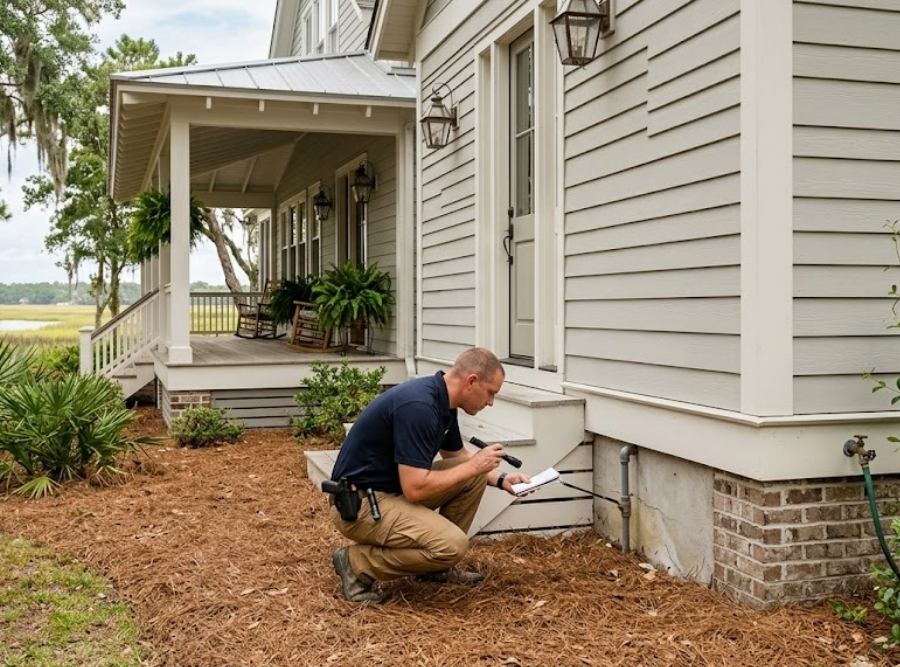
Most homes in Port Royal benefit from year-round pest control on a recurring schedule, with quarterly service being a practical starting point for general household pests. Homes near marshes, wooded areas, crawl spaces, rental properties, or locations with recurring mosquito, ant, cockroach, or rodent activity may need more frequent monitoring or targeted monthly service.
A homeowner may schedule a treatment, enjoy several quiet weeks, and then feel frustrated when ants return after heavy rain or a palmetto bug appears in the garage. That does not automatically mean the treatment failed. In a coastal climate like Port Royal, new pests are continuously moving through yards, landscaping, crawl spaces, porches, garages, and foundation areas, so pest control is less like fixing a broken appliance and more like maintaining a protective system around the home.
Port Royal does not experience the long, sustained winter freezes that reduce insect populations in colder parts of the country. High humidity, mild winters, dense vegetation, marshes, frequent rainfall, and long warm seasons allow many pests to remain active for most or all of the year. Even when homeowners are not seeing insects indoors, ants may be building colonies in the landscape, cockroaches may be sheltering beneath mulch, spiders may be establishing webs around exterior lights, and mosquitoes may be reproducing anywhere standing water remains.
This is why the right question is not simply how long a pest control product lasts. The more useful question is how often the property needs to be inspected, monitored, and protected based on its environment. Treatment materials naturally decline over time, but changing weather, new entry gaps, growing vegetation, moisture problems, and pests migrating from neighboring properties can also change the level of protection a home needs.
Is Quarterly Pest Control Enough for Most Port Royal Homes?
For many full-time residences in Port Royal, quarterly pest control provides a sensible balance between prevention, monitoring, and cost. A service every three months allows a professional to refresh exterior protection, look for developing pest activity, identify entry points, and adjust the treatment strategy as seasonal conditions change. It is generally more effective than waiting until insects become established indoors and then trying to solve the problem with a one-time visit.
Quarterly service is especially useful because pest pressure changes throughout the year. Warm spring weather often brings ants, wasps, mosquitoes, and termite swarmers. Summer humidity and afternoon storms increase cockroach, mosquito, spider, and fire ant activity, while cooler periods can push rodents and other pests toward sheltered areas around the home. A recurring schedule gives the treatment plan enough flexibility to respond to those changes rather than treating every season as though the same pests are active in the same places.
However, quarterly service should not be interpreted as a guarantee that a homeowner will never see an insect. Even a well-protected home in Port Royal may occasionally experience a palmetto bug after heavy rain or a few ants after a landscaping disturbance. The real measure of successful preventive pest control is whether those sightings remain isolated or develop into repeated indoor activity, nesting, reproduction, or an established infestation.
Why Pest Control Frequency Depends on the Property
Two homes a few streets apart can need very different service schedules. A newer infill home near the Old Village may have tight construction and relatively few entry points, while an older home near Paris Avenue or The Sands may have a vented crawl space, aging weatherstripping, mature landscaping, and foundation gaps that create more opportunities for pests. The surrounding environment and condition of the structure often matter just as much as the distance between service visits.
Homes near Battery Creek, Port Royal Landing, marsh edges, tidal creeks, wooded buffers, or retention areas generally experience higher outdoor pest pressure. Moisture remains available for longer periods, vegetation provides shelter, and nearby insect populations continuously replenish the pests moving across the property. In those settings, quarterly general pest service may still be appropriate, but mosquito treatments, rodent monitoring, termite inspections, or targeted exterior services may need their own schedules.
How a home is used also matters. Full-time residents often notice pest activity early because they see the property every day. Vacation homes and seasonal residences may remain unoccupied for weeks, giving pests more time to enter, nest, or reproduce before anyone recognizes a problem. Short-term rental owners also face a lower tolerance for even occasional pest sightings because one palmetto bug, ant trail, or wasp nest can quickly become a guest complaint.
The goal is not to place every home on the most frequent schedule possible. It is to choose a service interval that matches the pest pressure, property conditions, and level of risk. That decision should be based on what is happening at the home rather than on a generic recommendation that treats every Port Royal property the same.
Why Bugs Sometimes Appear Before the Next Scheduled Visit
One of the most common concerns homeowners have is that insects return before the next quarterly appointment. Treatments applied around a foundation or exterior perimeter are designed to provide residual protection, but they do not create an invisible wall that permanently stops every pest. Sunlight, rainfall, irrigation, landscaping activity, surface type, and normal environmental exposure all affect how long treatment materials remain effective in exposed areas.
Heavy rainfall is particularly important in the Lowcountry. A series of storms can saturate soil, disturb ant colonies, flood cockroach harborages, create mosquito breeding sites, and encourage insects to search for higher or drier shelter. At the same time, water moving across treated exterior surfaces may reduce the longevity of some applications, especially in areas receiving direct runoff or frequent irrigation.
New pests also arrive continuously from untreated areas. A neighboring property, wooded lot, marsh edge, mulch bed, drainage ditch, or dense landscape can support insect populations that move toward a home even after the existing activity has been controlled. Pest management therefore involves reducing ongoing pressure rather than permanently eliminating every insect in the surrounding environment.
This is where monitoring becomes important. One isolated insect after a storm may reflect temporary outdoor movement, while repeated sightings in the same room can suggest an entry gap, moisture source, or indoor harborage that deserves attention. A strong recurring service program should account for that difference and adjust the approach rather than simply applying the same treatment at every visit.
Does Port Royal Need Year-Round Pest Control?
For most homes in Port Royal, year-round prevention is more practical than treating pest control as a warm-weather service. Pest activity may become less visible during cooler periods, but it rarely stops completely. Cockroaches shelter in protected areas, ants continue operating from colonies, spiders remain near reliable food sources, termites stay active below ground, and rodents may move closer to homes when outdoor food or shelter changes.
Skipping service during winter can also create a gap just before spring pest pressure begins to rise. By the time homeowners notice ant trails, new wasp nests, spider webs, or termite swarmers, the underlying activity may already be well established. Maintaining the preventive cycle allows the home to enter spring with its protective measures in place instead of starting from behind.
Year-round service does not mean the exact same treatment should be performed every season. A thoughtful pest management program changes with weather, pest biology, property conditions, and what is found during inspection. The focus may shift from mosquitoes and exterior insects during warmer months to exclusion, rodent monitoring, crawl space conditions, and protected harborages during cooler periods.
This seasonal adjustment is one of the reasons recurring professional service offers more value than simply spraying the house on a fixed calendar. The schedule creates opportunities to inspect and respond, while the actual service should be tailored to what the home needs at that time.
When Monthly Pest Control May Make More Sense
Monthly service is not necessary for every Port Royal homeowner, but there are situations where a shorter interval is reasonable. Properties with intense mosquito pressure, recurring ant activity, established cockroach infestations, frequent rodent concerns, or ongoing sanitation and moisture issues may need closer monitoring until the problem is under control. Monthly service may also be more appropriate for businesses, restaurants, marinas, hotels, rental properties, and other locations where pest activity can affect customers, guests, operations, or food-handling areas.
Mosquito management commonly follows a different schedule from general household pest control because mosquito populations reproduce quickly during warm, wet weather. A home near marshes, shaded vegetation, irrigation systems, lagoons, or areas that hold standing water may benefit from monthly mosquito treatments during the active season even when its general pest service remains quarterly. The same principle applies to specialized termite monitoring, rodent programs, and other services that should not be forced into a single universal schedule.
More frequent service should have a clear purpose. It may be used to reduce a heavy population, monitor an active infestation, treat rapidly changing conditions, or protect a higher-risk property. Once the underlying issue has been corrected and activity is controlled, the schedule may be adjusted rather than continuing more frequent visits indefinitely.
Common Misconception: More Frequent Spraying Always Means Better Protection
One of the biggest misunderstandings about pest control frequency is the belief that more treatment automatically produces better results. Applying products too often, without considering pest biology, weather, moisture, entry points, or where activity is actually occurring, does not necessarily improve protection. Good pest management depends on using the right strategy at the right interval rather than repeatedly treating the same areas without understanding why pests are returning.
This is where Integrated Pest Management becomes important. A strong program combines inspection, targeted treatment, exclusion, moisture control, sanitation, and ongoing monitoring instead of relying entirely on chemical applications. If ants keep returning because a colony is established beneath a damp landscape bed, or palmetto bugs keep entering through a damaged door sweep, shortening the service interval may provide temporary relief without solving the underlying problem.
The opposite misconception is that one treatment should last indefinitely. Even a successful service cannot prevent new pests from moving onto the property months later, especially in a warm coastal environment where breeding and migration continue through much of the year. Recurring service is valuable because it maintains protection while giving technicians regular opportunities to identify changes around the home before they develop into larger problems.
What Homeowners Can Do Between Scheduled Visits
Professional service is only one part of long-term pest prevention. Homeowners can improve the effectiveness of a recurring program by reducing the food, water, shelter, and access points pests depend on. These steps do not replace treatment when an infestation is established, but they can significantly reduce the pressure placed on the home between appointments.
Moisture should be one of the first priorities. Gutters that overflow, downspouts that discharge beside the foundation, irrigation that keeps mulch constantly damp, and plumbing leaks beneath the home all create conditions that support ants, cockroaches, termites, mosquitoes, and other pests. Removing standing water and addressing drainage problems can sometimes make a greater difference than adding another surface treatment.
Landscaping also deserves regular attention. Shrubs, vines, and tree branches touching the structure create sheltered travel routes into siding, rooflines, windows, and attic openings. Pine straw, mulch, leaf litter, and stored materials placed directly against the foundation provide protected harborages where pests can remain close to the home. Creating separation between the structure and surrounding vegetation improves airflow, helps wet areas dry faster, and makes pest activity easier to identify.
Small maintenance issues should not be overlooked. Damaged door sweeps, worn weatherstripping, loose screens, open utility penetrations, foundation cracks, and poorly sealed garage doors can allow pests to bypass exterior treatments. When these openings are corrected, the home becomes less dependent on treatment alone and more resistant to recurring intrusion.
How Often Should Termite Inspections Be Scheduled?
Termite protection should not be treated exactly like general household pest control. Subterranean termites can remain concealed within soil, crawl spaces, structural wood, and wall systems for long periods before visible damage appears. Because Port Royal’s humidity, rainfall, mild winters, and crawl space construction create favorable termite conditions, regular inspections remain an important part of long-term property maintenance.
An annual termite inspection is a sensible standard for many Lowcountry homes, although the correct schedule may depend on the treatment system, warranty requirements, construction type, previous termite history, and moisture conditions. Homes with bait stations or an active termite protection agreement may require scheduled monitoring according to the specific system in place. A property that has experienced flooding, crawl space moisture, wood decay, or previous termite activity may also need closer attention.
Homeowners should not assume that a newer house is protected simply because it has modern materials or tighter construction. Termites need access to cellulose and moisture, and small construction gaps, landscaping changes, damaged barriers, or wood-to-soil contact can create opportunities over time. Regular inspections are valuable because they focus on conditions that may not be visible from the living areas of the home.
Termite swarmers also require careful identification. Winged ants and termite swarmers are commonly confused, especially during warm, humid weather following rain. A pile of discarded wings near windows, doors, or light fixtures should not be ignored, because correctly identifying the insect can determine whether the home is experiencing harmless seasonal ant activity or a sign of a nearby termite colony.
How Often Should Mosquito Control Be Scheduled?
Mosquito control usually requires a more frequent schedule than general household pest service because mosquitoes reproduce quickly and new adults continually move into treated areas. During warm, wet periods in Port Royal, monthly service is often a practical interval for properties experiencing persistent activity. Homes near marshes, tidal creeks, shaded vegetation, drainage areas, or standing water may require consistent treatment throughout the active season.
The effectiveness of mosquito service also depends heavily on what is happening around the property. Treating resting areas in vegetation can reduce adult mosquito populations, but untreated breeding sites may continue producing new mosquitoes. Clogged gutters, plant saucers, birdbaths, tarps, toys, drainage depressions, and containers that collect rainfall can undermine treatment if they are not emptied or corrected.
Homeowners sometimes expect one mosquito treatment to make the yard completely mosquito-free for the entire summer. That is not a realistic expectation in a coastal environment where weather, neighboring properties, marsh habitat, and rainfall continually influence mosquito pressure. The goal is to reduce the population enough to make outdoor areas significantly more usable while limiting breeding opportunities close to the home.
Special-event mosquito treatments may also make sense before an outdoor gathering, wedding, party, or family event. These services are different from a recurring seasonal program because they are timed to reduce activity during a specific period. Homeowners who regularly use porches, patios, pools, and outdoor entertaining areas usually receive more consistent results from an ongoing program than from occasional treatments after mosquito populations have already become severe.
What a Customized Pest Control Schedule Should Include
A reliable pest control schedule should begin with an evaluation of the property rather than a predetermined number of visits. The technician should consider which pests are active, where sightings occur, how the home is constructed, whether there is a crawl space, how landscaping affects the structure, and whether moisture or drainage problems are increasing pest pressure. A historic home near Old Village Port Royal may need a different strategy from a newer elevated home near Port Royal Landing.
The service should also include regular exterior inspection rather than focusing only on visible insects indoors. Foundation areas, door thresholds, crawl space vents, utility penetrations, window frames, eaves, porches, garages, mulch beds, and vegetation can reveal early signs of activity before pests become established inside. Spider webs, ant trails, wasp nesting, moisture-loving insects, and changes in exterior activity often provide useful clues about developing conditions.
Treatment should then be matched to the findings. Some visits may require attention around the exterior perimeter, while others may focus on exclusion, harborage reduction, mosquito resting areas, ant trails, or crawl space conditions. Applying the same products to the same places at every appointment without considering seasonal changes is not the same as a thoughtful preventive program.
Clear communication is equally important. Homeowners should understand what was found, what was treated, what conditions may be contributing to pest activity, and what they can do before the next visit. Education helps prevent the cycle in which pests return for the same reason because the underlying moisture, landscaping, sanitation, or structural problem was never addressed.
How to Know Whether Your Current Schedule Is Working
A successful pest control schedule should lead to fewer recurring sightings, reduced outdoor pressure around the structure, and quicker resolution when isolated activity appears. It should not be judged by whether a single insect is ever seen again. In a coastal environment, occasional pests may still enter after storms, landscaping work, or sudden weather changes even when a preventive program is working well.
Patterns matter more than isolated sightings. Seeing one palmetto bug after several days of heavy rain is different from seeing cockroaches every night in the kitchen. A few spiders rebuilding webs around porch lights is different from repeated indoor spider activity. The frequency, location, species, and timing of sightings help determine whether the schedule is appropriate or whether the treatment strategy needs to change.
If pest problems consistently return well before each scheduled visit, the issue should be investigated rather than dismissed. The property may have unusually high pest pressure, hidden moisture, untreated breeding sites, an established indoor population, or structural entry gaps that require correction. In some cases, a temporarily shorter service interval may be appropriate while those conditions are addressed.
A good pest management company should be willing to reassess the plan when circumstances change. Storm damage, new landscaping, crawl space repairs, nearby construction, extended vacancy, or a shift from full-time residence to short-term rental use can all affect pest activity. The schedule should serve the property, not force the property into an inflexible schedule.
The Best Pest Control Schedule for Port Royal Is Consistent and Property-Specific
For most Port Royal homes, year-round quarterly pest control is a practical starting point for preventing common household pests. Monthly service may be more appropriate for mosquitoes, active infestations, high-pressure waterfront properties, rentals, commercial environments, or homes with persistent moisture and landscaping challenges. Annual termite inspections should also remain part of the home’s protection plan, with additional monitoring based on the treatment system and property history.
The most important factor is consistency. When preventive service is skipped, exterior protection declines, pests regain access to established harborages, and minor activity has more time to develop unnoticed. Maintaining a regular schedule allows problems to be identified early, when they are usually easier and less expensive to correct.
At Mr. Pest Control, we do not believe every home should receive the exact same treatment plan. A home near Cypress Wetlands, a historic cottage off Paris Avenue, and a newer property near Shell Point may all experience different combinations of moisture, entry points, vegetation, and seasonal pest pressure. The right schedule should reflect those differences while focusing on long-term prevention rather than repeated temporary relief.
If you are unsure whether quarterly service is enough for your Port Royal home, Mr. Pest Control can evaluate the property, explain what is contributing to the activity, and recommend a schedule based on the pests and conditions actually present. The goal is not to schedule more visits than necessary, but to provide consistent protection that keeps small pest problems from becoming established infestations.
Joe Duncan is the owner of Mr. Pest Control, a family-owned pest control company that has served Bluffton, SC and the surrounding Lowcountry since 1955. As the third generation to run the business, Joe and his crew provide residential and commercial pest control, termite control, mosquito treatment, and bed bug services throughout Beaufort and Jasper County, SC. He’s built the company’s reputation on straightforward, no-nonsense service backed by a money-back guarantee.