
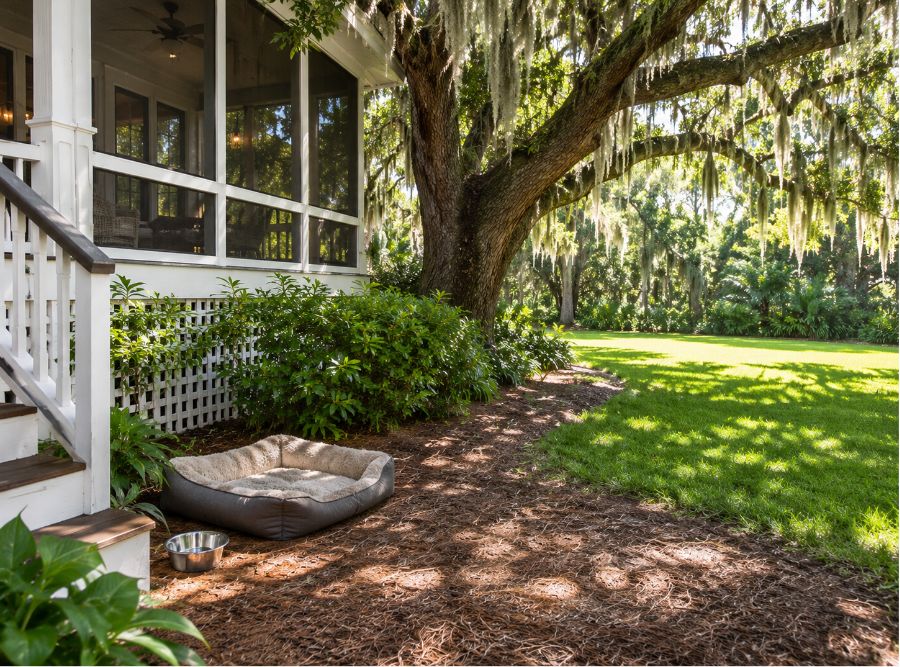
To get rid of fleas in a Beaufort yard, you have to treat the animals and the places where fleas develop at the same time. That means putting every pet on veterinarian-recommended flea prevention, treating the shaded spots where pets and wildlife rest rather than spraying the whole lawn, and following up a few weeks later to catch fleas that emerge from protected cocoons.
The dog comes in from the backyard and immediately starts scratching. A few days later someone notices small red bites around their ankles after sitting on the porch. You treat the dog, maybe spray the lawn, and for a week it seems better. Then the scratching starts again. Many Beaufort homeowners deal with this cycle, and it is often worst in shaded yards, under raised porches, and on properties where cats, raccoons, or opossums pass through at night.
Fleas are frustrating because most of the population is not the adults you see. Eggs, larvae, and pupae develop in sheltered spots out of sight, and they keep producing new adults after a treatment that seemed to work. This article explains where fleas actually live in a Lowcountry yard, how to make sure fleas are really the problem, why they keep coming back, and what a plan that works looks like.
Why Fleas Show Up in Beaufort Yards
The flea most homeowners deal with is the cat flea, which despite its name feeds on dogs and cats alike, along with wildlife such as raccoons and opossums. Adult fleas live on the animal. Their eggs fall off wherever the animal rests, and that is where the next generation develops. The larvae feed on organic debris and flea droppings, then spin cocoons where they can sit protected until a passing animal or person triggers them to emerge. A yard flea problem is really a problem with the places animals rest.
That is why fleas are not spread evenly across a lawn. Open, sunny grass that bakes in a Beaufort summer is a poor place for flea larvae, which dry out easily. Shaded, humid, sheltered spots are where they thrive. Think of the ground under a raised porch or deck, beneath shrubs along the foundation, under outdoor furniture, around a doghouse or kennel, along a fence line where pets patrol, and in leaf litter under mature live oaks. In older neighborhoods like The Point, Pigeon Point, and Mossy Oaks, heavy tree shade and raised homes on piers create plenty of these protected spaces.
Pets are only part of the picture. Stray cats, raccoons, and opossums often shelter under raised Lowcountry homes, decks, and porches, and they can keep supplying flea eggs to a yard even when the family dog is fully protected. This is also why homeowners without pets sometimes find fleas, especially after moving into a house. Beaufort’s military community means many families move in and out, and a previous owner’s pets or animals that sheltered under a vacant house can leave a population of protected cocoons that wakes up when new people and pets arrive.
First, Make Sure It’s Actually Fleas
Itchy ankles after time outside do not prove you have fleas. In Beaufort, several other pests cause similar complaints. No-see-ums, the tiny biting midges that rise from the salt marsh at dawn and dusk, bite exposed skin and are easy to blame on fleas, but they fly and are rarely seen. Chiggers, the larvae of certain mites, cause intensely itchy bites around the ankles, waistband, and the backs of the knees after walking through tall grass or brush. Mosquitoes are another obvious possibility. Treating the yard for the wrong pest wastes time and money and leaves the real problem in place.
Fleas leave more specific evidence. They are tiny, dark reddish-brown, wingless insects that jump. You may see them moving through your pet’s fur, especially around the base of the tail and the belly. Flea dirt, which is digested blood, shows up as black specks in the fur or bedding and turns reddish when dabbed on a damp white paper towel. Pets scratching or chewing more after time outdoors is another strong clue.
A simple yard test helps confirm where fleas are concentrated. Put on a pair of tall white socks pulled up over your pants and walk slowly through the areas where your pets rest, especially shaded spots under decks, along fences, and beneath shrubs. Fleas will jump onto the white fabric and are easy to spot. If you pick up fleas in some areas and not others, you have found your treatment zones. If you find nothing but still have bites, it is worth asking whether midges, chiggers, or mosquitoes are the real cause.
Why Fleas Come Back After You Spray
The most common reason is the flea cocoon. Pupae inside their cocoons are well protected from most insecticides, and they can stay there for a period, waiting for vibration, warmth, or the carbon dioxide of a passing animal before they emerge. A yard can be treated successfully, adults can drop off sharply, and a week or two later a new wave appears as protected pupae finish developing. Homeowners often assume the product failed when the treatment was actually working through the life cycle. This is why follow-up timing matters as much as the first application.
The second reason is the animals. If even one pet in the household is not on effective flea prevention, it keeps feeding fleas and dropping eggs back into the yard and the house. If stray cats or wildlife are sleeping under the deck or the house, they do the same thing no matter how well your own pets are protected. Treating the yard while the source keeps resupplying it will never fully work.
The third reason is treating the wrong places. Broadcasting a spray across the sunny front lawn while missing the shaded strip under the porch, the dog’s favorite spot beside the air conditioning unit, or the crawl-space opening where a cat sleeps leaves the real flea habitat untouched. Indoor reservoirs cause the same problem from the other side. Once fleas establish in pet bedding, rugs, or upholstered furniture, they keep reinfesting the pets, who carry them back outside.
Some DIY choices create added risk. Essential oil sprays and homemade mixtures are not reliable flea control, and some essential oils are toxic to pets, particularly cats. Flea products made for dogs can be dangerous or deadly to cats if used on them. Lawn products used beyond their label rates, or right before a heavy afternoon storm, can wash into storm drains, ditches, and the tidal creeks that run through so much of Beaufort.
How to Get Rid of Fleas in Your Beaufort Yard
Start with the animals, because nothing else holds without them. Every dog and cat in the household should be on a flea prevention product your veterinarian recommends for that animal, started at the same time as any yard work. If a pet has open sores, heavy hair loss, pale gums, or seems lethargic, see the veterinarian first. Heavy flea burdens can cause real health problems, especially in puppies, kittens, and small animals.
Next, treat the places fleas actually develop. Using what you learned from the white sock test and from watching where your pets and visiting animals rest, focus on shaded, sheltered areas. That means the ground under decks and raised porches, beneath shrubs and outdoor furniture, along fence lines, around kennels and doghouses, and near crawl-space openings. Effective outdoor flea control often combines a product that kills adult fleas with an insect growth regulator that stops eggs and larvae from developing, applied exactly as the label directs. Keep pets and children off treated areas for as long as the label specifies. On waterfront and marsh-front lots near the Beaufort River, Battery Creek, or the tidal creeks around Lady’s Island, product choice and application need extra care to keep runoff out of the water.
At the same time, deal with the inside of the house. Wash pet bedding in hot water, vacuum carpets, rugs, and upholstered furniture thoroughly, especially where pets sleep, and empty the vacuum outdoors. Vacuuming also creates the vibration that prompts pupae to emerge, which makes them easier to kill.
Then make the yard less welcoming. Rake out leaf litter and debris from shaded areas, trim low shrubs so sunlight and air reach the ground, and keep the lawn mowed. If wildlife or stray cats are sheltering under the house or deck, work with a licensed wildlife removal company to remove them and seal the access points, because they will keep bringing fleas back. Finally, plan a follow-up. Check again in two to three weeks with the sock test, and expect a second treatment if new adults emerge from protected cocoons.
How Mr. Pest Control Handles Yard Fleas in Beaufort
Our flea and tick program is built around where fleas actually live, not around covering every square foot of grass. We start by walking the property to find the shaded resting areas, vegetation edges, ground cover, and sheltered spaces under decks and porches where fleas concentrate during the day. We also look for signs that wildlife or stray cats are using the space under the house or deck, because that changes what the yard needs. Then we ask about the pets, including how many there are, where they spend their time, and what flea prevention they are on.
Treatment goes where the inspection points, using products and application methods chosen for a yard where pets and children play. We explain how long to keep them off treated areas based on the specific products used. On properties near marsh, tidal creeks, or drainage ditches, we account for label restrictions and runoff from the start. Because the flea life cycle makes a second wave from protected cocoons likely, the plan includes follow-up rather than a single visit and a hope.
We will also be straightforward about the parts of the problem outside our yard treatment. If your pets need a different prevention product, that is a conversation for your veterinarian. If the fleas have moved into the house, thorough indoor cleaning matters. If animals are living under the porch, they need to be removed and the access closed. Flea control can be bundled into our broader lawn pest program, which also covers fire ants, ticks, grubs, and chinch bugs. With four generations of pest control experience, our family-operated team knows that lasting results come from treating the whole cycle, not just the fleas you can see.
Yard Flea Questions We Hear in Beaufort
Can my yard have fleas if I don’t have pets?
Yes. Stray cats, raccoons, opossums, and other wildlife carry fleas and often rest under raised homes, decks, and porches, leaving eggs behind. A previous owner’s pets can also leave protected cocoons in a yard or crawl space that emerge after new occupants move in. If you have no pets and still find fleas, look for signs of animals sheltering on the property.
Do fleas go away in winter in Beaufort?
Not reliably. Cooler weather slows flea development, but Beaufort’s winters are usually mild, and sheltered spots under homes and decks, along with warm indoor spaces, can keep the cycle going. Activity typically picks up again as temperatures rise in spring, so fleas that seemed to disappear in January may be back by April if the source was never addressed.
Is yard flea treatment safe for my dog?
It depends on the product and how it is applied. Outdoor flea treatments carry label directions on when pets and people can return to treated areas, and those directions should be followed exactly. Cats need extra caution, since some products and essential oils that are tolerated by dogs can be toxic to cats. Ask your pest control provider which products will be used and what precautions apply to your pets.
How long does it take to get rid of fleas in the yard?
Plan on several weeks, not one visit. You will often see a sharp drop in adult fleas soon after treatment, followed by some new adults as protected pupae emerge over the next couple of weeks. With pets on prevention, targeted outdoor treatment, indoor cleaning, and a follow-up application, most yards come under control within that window, as long as wildlife or untreated animals are not reintroducing fleas.
Breaking the Flea Cycle in Your Beaufort Yard
Fleas in a Beaufort yard are a life-cycle problem tied to the animals that rest there. Spraying the lawn alone rarely ends it. Putting every pet on veterinarian-recommended prevention, treating the shaded spots where fleas develop, cleaning the inside of the house, keeping wildlife from sheltering under the home, and following up when protected cocoons hatch is what breaks the cycle. If you have tried the store-bought sprays and the scratching keeps coming back, or you suspect animals under the house are part of the problem, call Mr. Pest Control at (843) 295-4555 for a free quote. Our family-run team will find where the fleas are coming from and put together a plan that fits your yard and your pets.
